
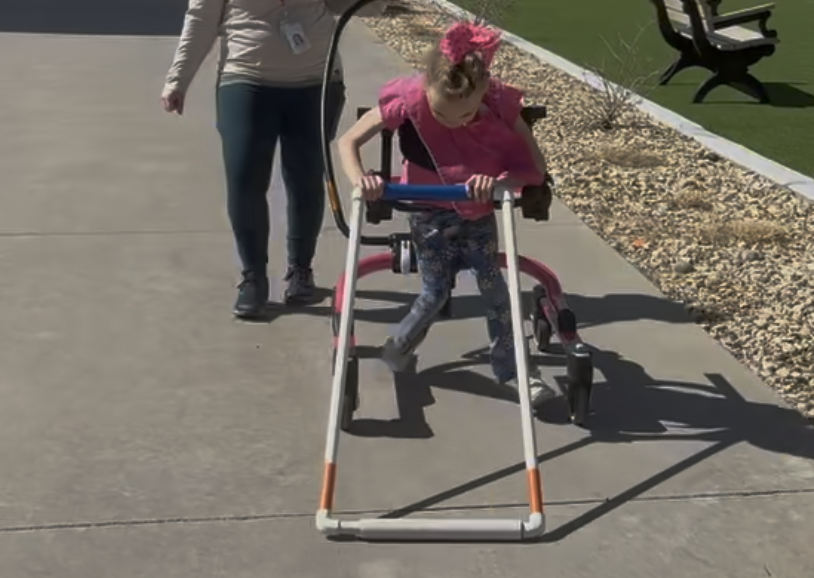
Many people may not fully understand the significance of a person walking with a white cane. For our family, however, the white cane represents safety, independence, confidence, freedom, and possibility.
We are a family with two children who have significant visual impairments and are considered legally blind. Because of their visual challenges, learning to use a white cane has been an essential part of helping them safely navigate the world around them.
Our children did not simply pick up their canes one day and automatically know how to use them. They have received hundreds of hours of instruction and training with Orientation and Mobility (O&M) professionals. Through that training, they have learned how to use their canes to identify changes in surfaces, recognize obstacles, navigate unfamiliar environments, travel more safely, and become increasingly independent.
But there is another part of this journey that is harder to measure. They have also had to learn to connect with their canes physically and emotionally.
More Than a Cane
For a child who is blind or has low vision, accepting a white cane can be a journey in itself. The cane makes a child's visual disability visible to the world in a way that it might not otherwise be.
As parents, we have watched our children learn that their canes are not something they should be ashamed of or something that limits them. Instead, their canes are tools that give them greater access to the world around them. They provide information that their vision cannot and allow our children to move through their environments with greater safety and confidence.
A white cane says, in its own quiet way, I can move forward. I can explore. I can participate. I can become more independent.
That is one of the reasons White Cane Day has become so meaningful to our family. It gives us an opportunity to celebrate not simply the tool, but everything that tool makes possible.
What Is White Cane Day?
White Cane Safety Day is recognized annually in the United States on October 15.
Its national history dates to 1964, when Congress approved legislation authorizing the president to designate October 15 as White Cane Safety Day. President Lyndon B. Johnson issued the first presidential proclamation that year, recognizing the white cane as an important symbol of a blind person's ability to travel independently.
Over the years, the observance has increasingly emphasized not only pedestrian safety, but also the independence, equality, accomplishments, and self-determination of people who are blind or have low vision.
For our family, that broader meaning is particularly important. White Cane Day isn't simply about a cane. It is about the person holding it, the life they are living, and the possibilities that open up when they have the tools and support to navigate the world independently.
Our First White Cane Day
We first celebrated White Cane Day several years ago with our children's school, the Colorado School for the Deaf and the Blind in Colorado Springs.
I still remember what an incredible experience it was for our family. There was so much talent and joy to celebrate. We experienced songs, poetry, and activities in addition to families, professionals, students, and a community of people who understood experiences similar to ours.
As parents raising children who are blind or have low vision, there is something powerful about being in an environment where you do not have to spend your time explaining your child's disability. People simply understand. They understand the challenges, the accomplishments, the adaptations, and the little victories that may not be obvious to someone outside the community.
Even more importantly, our children were surrounded by other people who navigated the world in ways similar to them. Instead of their white canes making them stand out, the canes connected them to a community.
We were not gathering because of what our children could not do. We were celebrating what they COULD do. That distinction matters.
Walking Through the Community With Pride
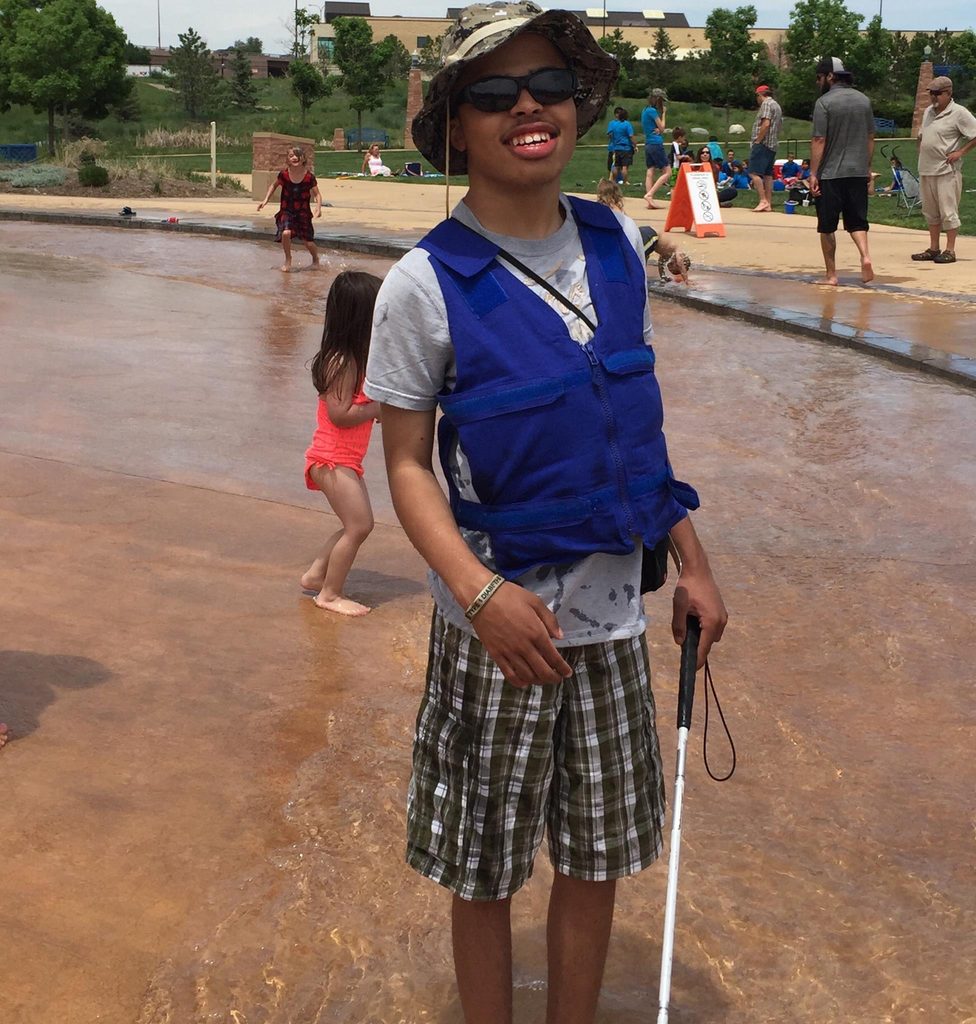
One of the most powerful parts of White Cane Day is going out into the community. Imagine children and adults who are blind or have low vision walking together, their white canes moving in front of them as they navigate sidewalks, intersections, buildings, and public spaces.
To someone unfamiliar with blindness, it may simply look like a group of people walking with white canes. To me, it looks like independence in motion.
When my children walk through the community using their white canes alongside other people who share similar experiences, they are doing more than practicing mobility skills. They are helping people see blindness differently.
They are demonstrating that a person who is blind or has low vision can participate in school, family life, recreation, employment, community activities, and countless other aspects of everyday life. They are students, siblings, friends, athletes, artists, neighbors, and community members. Their visual impairment is part of who they are, but it does not define everything they are capable of doing.
Awareness Helps Break Down Barriers
This is also why disability and healthcare awareness are so important.
People sometimes fear, avoid, underestimate, or even reject what they do not understand or have never been exposed to. Awareness helps change that. When communities have opportunities to interact with people who have disabilities, ask respectful questions, learn about adaptive tools, and witness independence firsthand, misconceptions can begin to disappear.
White Cane Day creates one of those opportunities. It allows people who are blind or have low vision to be visible not as people who should be pitied, but as students, professionals, parents, children, athletes, artists, neighbors, friends, and contributing members of their communities.
That visibility can be powerful because representation changes expectations. When children who are blind or have low vision engage with adults who are blind or have low vision living full and independent lives, they can begin to imagine those possibilities for themselves. When sighted children and adults have the opportunity to interact with people with visual disabilities, they also begin to understand that blindness or low vision does not mean helplessness or inability.
Teaching Our Children That Independence Belongs to Them
As a mother, one of my greatest hopes is that my children understand that their disability does not erase their potential.
Their journey may sometimes look different from that of their sighted peers. They may need accommodations, specialized instruction, accessible technology, Orientation and Mobility training, or other supports. They may need to approach certain tasks differently or take more time to learn skills that come naturally to someone with typical vision.
But different does not mean incapable.
Every hour they have spent learning how to properly use their white canes has been an investment in their future independence. Every sidewalk they learn to navigate, every unfamiliar environment they learn to explore, and every new skill they gain expands the world that is accessible to them.
And every time they confidently pick up their canes and move forward, it matters. It is another step toward becoming the people they want to be and living the lives they choose.
Every time the community sees them doing it, perceptions about blindness and low vision have an opportunity to change as well.
Why I Am Sharing Our Story
That is why I wanted to write this article. I wanted to share the joy that our family has experienced through White Cane Day and the meaning that this day has taken on for our family over the years.
What began for us as a school activity became something much more meaningful. It became an opportunity to celebrate our children, connect with other families, appreciate the professionals who help our children develop independence, and educate the larger community about blindness and low vision.
For us, White Cane Day is a family affair.
But my hope is that someday it will become something much bigger. I hope schools, businesses, healthcare organizations, churches, community groups, government agencies, families, and individuals will recognize October 15 and learn what the white cane truly represents.
I hope children who are blind or have low vision will grow up seeing people celebrate their independence rather than focusing only on their disability. I hope families beginning this journey will see other families walking ahead of them and realize that they are part of a larger community. And I hope communities will become increasingly comfortable seeing people who are blind or have low vision moving through the world independently and confidently.
When someone sees my children, or anyone else, walking confidently down the street with a white cane, I hope they will understand what they are really witnessing.
They are witnessing freedom.
They are witnessing confidence.
They are witnessing independence.
And most importantly, they are witnessing a person moving through the world on their own terms.
Perhaps one day White Cane Day will no longer feel like an event known primarily within the blind and low vision community. Perhaps it will truly become a community affair and eventually a worldwide celebration of independence, inclusion, and human potential.
Learn More About White Cane Day and Visual Impairment
Readers who would like to learn more can explore the National Federation of the Blind, which provides information about blindness, independent travel, resources, and white cane programs. The organization also offers a free white cane program designed to support independent travel.
Families in Colorado can also learn more about the Colorado School for the Deaf and the Blind, which serves students who are deaf, blind, or deafblind and provides services and outreach to families and school districts throughout Colorado.
On this October 15, White Cane Day, let us celebrate the cane, but even more importantly, let us celebrate the people who use it.
Guest insight by Sheila Williams